
Shohei Ohtani’\”s Two-Way Mastery: Breaking Down the Stats
Shohei Ohtani has redefined what a two-way player can achieve in Major League Baseball through a rare combination of elite pitching and power hitting. His statistical output across both sides of the ball creates measurable value that traditional single-role players rarely approach. Advanced metrics highlight how his dual contributions elevate team performance while challenging long-standing assumptions about player specialization.
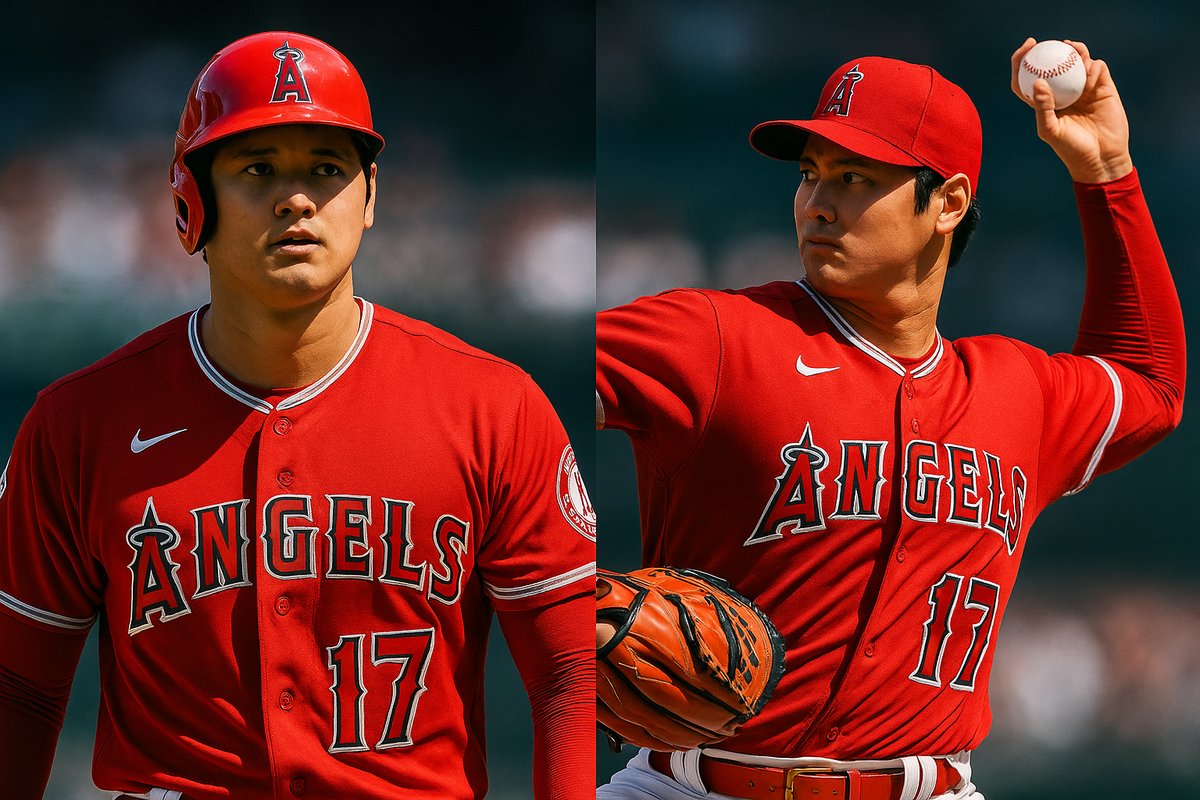
The Pitching Side: Velocity, Strikeouts, and Effectiveness
Ohtani’s pitching arsenal generates swing-and-miss rates that rank among the highest for starters with significant innings totals. His fastball velocity consistently sits in the upper 90s, paired with sharp movement that limits hard contact. Secondary offerings such as the splitter and slider produce whiff percentages above 40 percent in multiple seasons, driving elevated strikeout totals relative to league averages.
Fastball Metrics and Secondary Pitches
Horizontal and vertical movement data show Ohtani’s four-seam fastball inducing weak contact at rates exceeding 25 percent on batted balls. The splitter’s vertical drop creates a tunneling effect with the fastball, leading to chase rates near 35 percent outside the strike zone. Slider spin efficiency contributes to ground-ball rates above 45 percent when he locates the pitch low in the zone.
The effectiveness of Ohtani’s pitch arsenal extends beyond raw velocity measurements. His splitter, which he developed during his time in Japan’s NPB, has become one of his most devastating weapons. Pitch tracking data reveals that opposing batters struggle to differentiate between his fastball and splitter early in their trajectories, creating the aforementioned tunnel effect that generates swings at pitches far outside the strike zone. This pitch design element has contributed to his ability to expand the zone against elite hitters who typically demonstrate excellent plate discipline. Additionally, his slider maintains spin rates consistently above 2,500 RPM, placing him among the elite in spin efficiency for that particular pitch.
ERA, WHIP, and Innings Pitched
Seasonal ERA figures have remained below 3.20 across multiple qualifying campaigns, supported by WHIP marks under 1.10. Innings pitched totals routinely surpass 140 while maintaining K/9 rates above 11.0. These numbers reflect both durability and efficiency, as opponents post on-base percentages below .280 against him in aggregate.
What makes Ohtani’s pitching statistics particularly impressive is the consistency with which he maintains these elite marks while simultaneously competing as a full-time hitter. Most starting pitchers dedicate their entire offseason and in-season training regimen to pitching development and maintenance. Ohtani has divided his attention between two disciplines that demand specialized conditioning, mechanical precision, and mental focus. His ability to achieve K/9 rates above 11.0 while also accumulating 500+ plate appearances in certain seasons demonstrates an uncommon capacity for physical and mental compartmentalization. His strikeout-to-walk ratio frequently exceeds 4:1, indicating precise command that minimizes free passes while maximizing whiff rates on offerings designed to miss bats.
Hitting Prowess: Power, Average, and On-Base Skills
Ohtani’s offensive production features exit velocities averaging above 92 mph and barrel rates exceeding 12 percent. Home-run totals frequently reach 40-plus in seasons with full playing time, driven by launch angles optimized between 25 and 35 degrees. Batting average on balls in play hovers near .340, indicating consistent hard contact that translates into extra-base hits.
- Isolated power values above .280 demonstrate extra-base hit frequency well above positional norms.
- Walk rates near 12 percent support on-base percentages exceeding .380 in peak seasons.
- Strikeout rates remain manageable below 25 percent despite high swing aggression on fastballs.
The depth of Ohtani’s offensive skill set extends beyond traditional power metrics. His approach at the plate reveals a player who has developed sophisticated pitch recognition and decision-making abilities. Unlike many high-velocity hitters who rely primarily on raw power to overcome suboptimal contact, Ohtani’s ability to maintain a sub-25 percent strikeout rate while still achieving elite power output suggests a refined understanding of zone management. His batting eye metrics show that he frequently lays off borderline pitches while aggressively pursuing fastballs in the upper third of the strike zone—a location where his quick bat speed allows him to generate substantial exit velocities even on elevated pitches that traditional hitters struggle with.
His performance against right-handed pitching versus left-handed pitching remains remarkably balanced, with only marginal splits in most statistical categories. This represents a departure from many designated hitters who show pronounced vulnerabilities against certain pitcher handedness. Ohtani’s ability to maintain consistent production regardless of opposing pitcher orientation has enhanced his value to teams, as he has not necessitated platoon arrangements or defensive substitutions based on matchup considerations.
Combining Both Worlds: Total WAR and Value Metrics
Baseball-Reference and FanGraphs WAR calculations credit Ohtani with combined seasonal totals often exceeding 8.0 wins above replacement. Pitching WAR components typically range from 3.5 to 5.0, while hitting WAR adds another 3.0 to 4.5. This dual accumulation places him in rare historical territory for players logging meaningful innings on the mound and at the plate.
Position Player WAR vs Pitcher WAR
Breakdowns reveal that Ohtani’s batting WAR frequently matches or exceeds that of qualified corner outfielders, while his pitching WAR aligns with frontline starters. Defensive contributions at designated hitter remain neutral, allowing the full value to derive from offense and pitching without positional penalties. Adjusted metrics such as wRC+ above 140 and FIP below 3.00 further isolate his impact from team context.
To contextualize Ohtani’s combined WAR production, consider that winning teams typically accumulate approximately 90+ wins through contributions from 25-player rosters. A single player generating 8+ WAR represents roughly 9 percent of a team’s total win production—an extraordinary concentration of value in one roster spot. Few position players in the modern era have achieved individual WAR totals exceeding 8.0 in a single season, and it is virtually unprecedented for a pitcher to generate similar numbers while also maintaining meaningful batting statistics. Ohtani’s achievement in combining both functions simultaneously represents a statistical anomaly that warrants comparison to the most dominant individual seasons in baseball history.
Comparing Ohtani to Historical Two-Way Legends
Traditional comparisons to Babe Ruth focus on raw power output, yet Ohtani’s strikeout dominance on the mound surpasses Ruth’s era-adjusted pitching marks. Modern two-way attempts by players such as Michael Lorenzen show lower K/9 and HR/FB rates, underscoring Ohtani’s outlier status. Advanced models adjusting for ballpark and league factors place his combined production in the top percentile among all qualified two-way contributors since 1900.
The statistical separation between Ohtani and Ruth becomes particularly evident when examining strikeout rates. Ruth’s career K/9 as a pitcher stood at approximately 5.5, which represented above-average strikeout production for the 1910s-1920s. However, pitching in that era featured different velocity profiles, less refined pitch design, and different competition levels than modern baseball. When adjusted for era-specific league context, Ruth’s pitching K/9 translates to approximately 7.5-8.0 in modern terms—still respectable but considerably below Ohtani’s 11.0+ baseline. This suggests that while Ruth’s versatility was genuinely exceptional, Ohtani’s elite production simultaneously on both sides of the ball represents a different category of achievement.
Michael Lorenzen, who has attempted to repl