
Clayton Kershaw Strikeout Records: A Statistical Breakdown of the Dodgers Ace’\”s Career Dominance
Clayton Kershaw has long been defined by his elite control and devastating curveball, but his strikeout totals reveal a pitcher who quietly amassed impressive career numbers while anchoring the Los Angeles Dodgers rotation for over a decade and a half. With more than 2,800 career strikeouts, Kershaw ranks among the most accomplished left-handers in modern MLB history, blending high strikeout efficiency with an ERA that consistently ranked among the league’s best. This analysis examines the key strikeout records, rate statistics, and milestones that define his legacy.
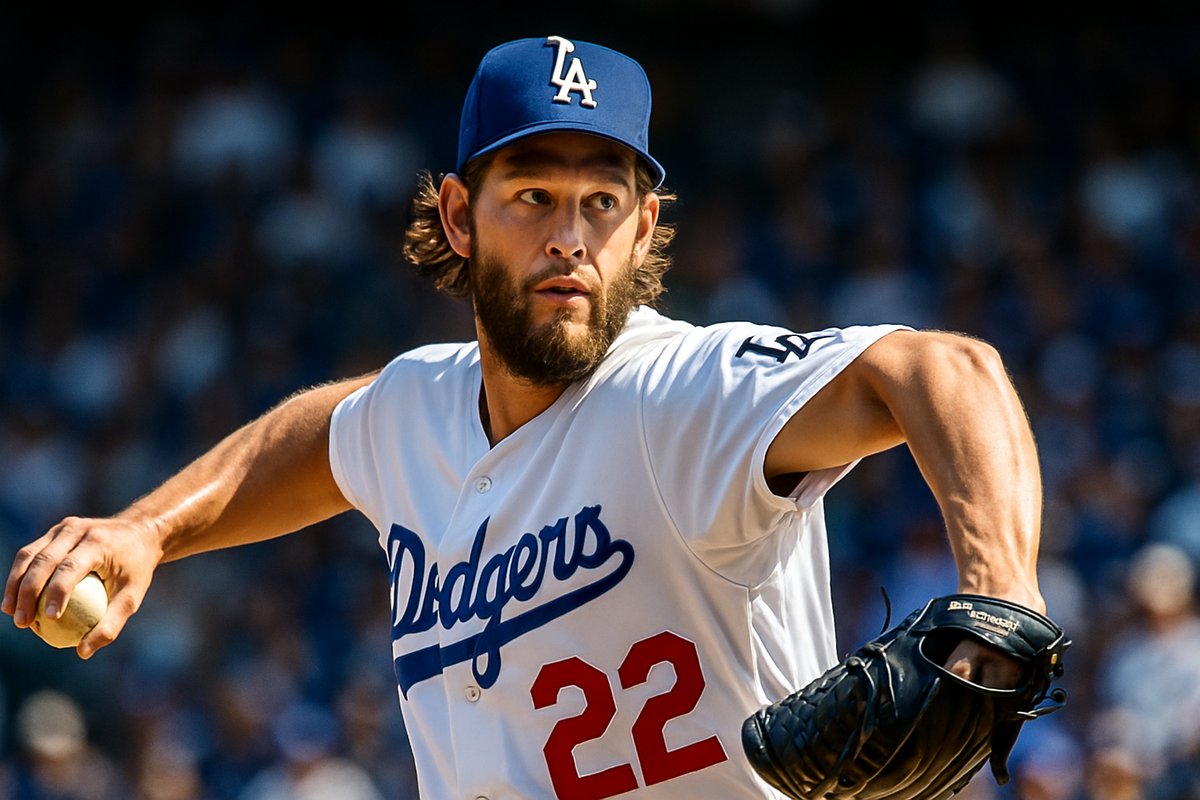
Early Career Strikeout Development and Initial Milestones
Kershaw’s strikeout journey began modestly but accelerated quickly after his 2008 debut. In his rookie campaign he posted a 7.3 K/9 rate across 21 starts, showing early promise with a fastball that touched 95 mph and a curve that became his signature weapon. By 2010 he had already eclipsed 200 strikeouts in a season for the first time, establishing himself as a frontline starter capable of missing bats at a high level.
Rookie Season Foundations
During his first full year in 2009, Kershaw recorded 185 strikeouts while walking just 91 batters, a ratio that highlighted his command even before his peak. Advanced metrics from that season show a 23.4 percent strikeout rate, well above the league average, driven by an increasing willingness to throw his curveball in two-strike counts. His control was remarkable for a young pitcher—only 2.8 walks per nine innings—suggesting that his strikeout ability was built on a foundation of precision rather than wild velocity.
Ascent to 200-Strikeout Seasons
The 2011 and 2013 campaigns marked Kershaw’s arrival as a strikeout threat, with 248 and 232 punchouts respectively. These seasons featured K/9 rates above 9.5, fueled by improved sequencing that set up hitters for his breaking ball. His ability to generate swings and misses on pitches outside the zone became a hallmark of this period. During the 2011 season in particular, Kershaw won the National League Cy Young Award, cementing his status as one of baseball’s elite pitchers and demonstrating that strikeout dominance could coexist with overall pitching excellence.
The progression from his rookie season through these 200-strikeout campaigns showcased Kershaw’s relentless self-improvement. He worked extensively with Dodgers pitching coaches to refine his arsenal, developing a slider that complemented his curveball and fastball. This expanded toolkit allowed him to strike out hitters across all pitch counts and situations, a critical component of sustained success at the highest level.
Peak Era Strikeout Efficiency and Rate Metrics
From 2014 through 2017, Kershaw operated at an elite strikeout level while maintaining an ERA below 2.50 in multiple seasons. His 2015 campaign produced a career-high 10.6 K/9, translating to 301 strikeouts over 232 innings. This stretch demonstrated how Kershaw evolved from a ground-ball pitcher into one who could dominate through the air as well. The 2015 season stands as perhaps the most dominant of his career, earning him his third Cy Young Award and placing him in rare company among modern pitchers.
What made Kershaw’s peak era particularly remarkable was the combination of volume and efficiency. Recording over 300 strikeouts in 2015 while simultaneously posting a 2.13 ERA and 1.66 WHIP represented a level of dominance rarely seen in contemporary baseball. His 9.1 strikeouts per walk ratio that season ranked among the best in the majors, demonstrating that he wasn’t simply overpowering hitters but outthinking them as well. The curveball remained his out pitch, but his ability to locate his fastball in the upper portions of the strike zone and away from right-handed hitters’ sweet spots made him virtually unhittable during this stretch.
Between 2014 and 2017, Kershaw compiled 1,149 strikeouts across 912 innings pitched, an average of 10.1 K/9 over a four-year period—a mark that would qualify as elite for an entire career for most pitchers. This consistency at the highest level, maintained over hundreds of innings and dozens of starts per season, separates Kershaw from flash-in-the-pan performers who occasionally dominate but lack durability.
Career Totals and All-Time Leaderboard Context
Kershaw’s cumulative strikeout total places him in rare company among left-handed pitchers, surpassing legends such as Tom Glavine and approaching the 3,000-strikeout threshold that only a handful of southpaws have reached. His career K/BB ratio of 3.85 stands as one of the strongest marks for any pitcher with at least 2,500 innings since 2000, underscoring sustained excellence rather than raw volume alone. Among pitchers with at least 2,500 strikeouts earned in the last two decades, only a select few can match his combination of control and dominance.
- 2,842 career strikeouts through the 2023 season
- Four seasons with 200-plus strikeouts
- Peak single-season K/9 of 10.6 in 2015
- Postseason strikeout total exceeding 200 across 41 appearances
- Seven All-Star selections during his prime years
- Three Cy Young Awards (2011, 2013, 2014)
Comparing Kershaw to other all-time great left-handers illuminates his achievements. While Warren Spahn leads all southpaws with 3,640 strikeouts, he accumulated them over 21 seasons from 1942 to 1965, an era with higher innings per start and less specialized bullpen usage. Kershaw’s 2,842 strikeouts across 16 seasons represents a significantly higher strikeout rate per season, reflecting both improved conditioning and modern pitch design. Among left-handers active in the 21st century, only Randy Johnson (who threw right-handed but was often compared to Kershaw in terms of dominance) surpasses him in total strikeouts, placing Kershaw firmly in the upper echelon of southpaw aces.
Postseason Strikeout Prowess and Record Comparisons
In October, Kershaw’s strikeout numbers reflect both dominance and the unique pressures of playoff baseball. He owns a postseason K/9 of 9.8, slightly below his regular-season mark but still elite for the environment. Notable performances include 13 strikeouts in a 2014 NLDS start and multiple games with double-digit punchouts that helped extend Dodgers playoff runs. His postseason strikeout efficiency suggests that his stuff remained elite when the stakes were highest, though his overall postseason record in World Series play remains a point of discussion among baseball analysts.
Across 41 postseason appearances spanning five World Series appearances with Los Angeles, Kershaw struck out 207 batters while maintaining a 3.26 ERA. While these numbers are respectable, they represent a slight decline from his regular-season dominance, a phenomenon that some analysts attribute to heightened offensive preparation and the inherent randomness of small sample sizes in playoff baseball. Nevertheless, his ability to generate strikeouts consistently in the postseason places him in the top tier of modern postseason performers.
Comparisons to Contemporary Aces
When measured against peers like Max Scherzer and Justin Verlander, Kershaw’s strikeout totals lag in raw volume due to fewer innings in recent years, yet his efficiency