
Mookie Betts Dodgers Career Stats: A Deep Dive into Performance and Value
Mookie Betts has established himself as one of the most complete players in Dodgers history through a combination of elite contact skills, gap power, and Gold Glove defense. His career numbers with the club reveal consistent production across multiple dimensions, making him a cornerstone of the lineup and a defensive anchor in right field. Examining his raw totals and advanced metrics provides a clear picture of how Betts has elevated both individual and team performance since arriving in Los Angeles.
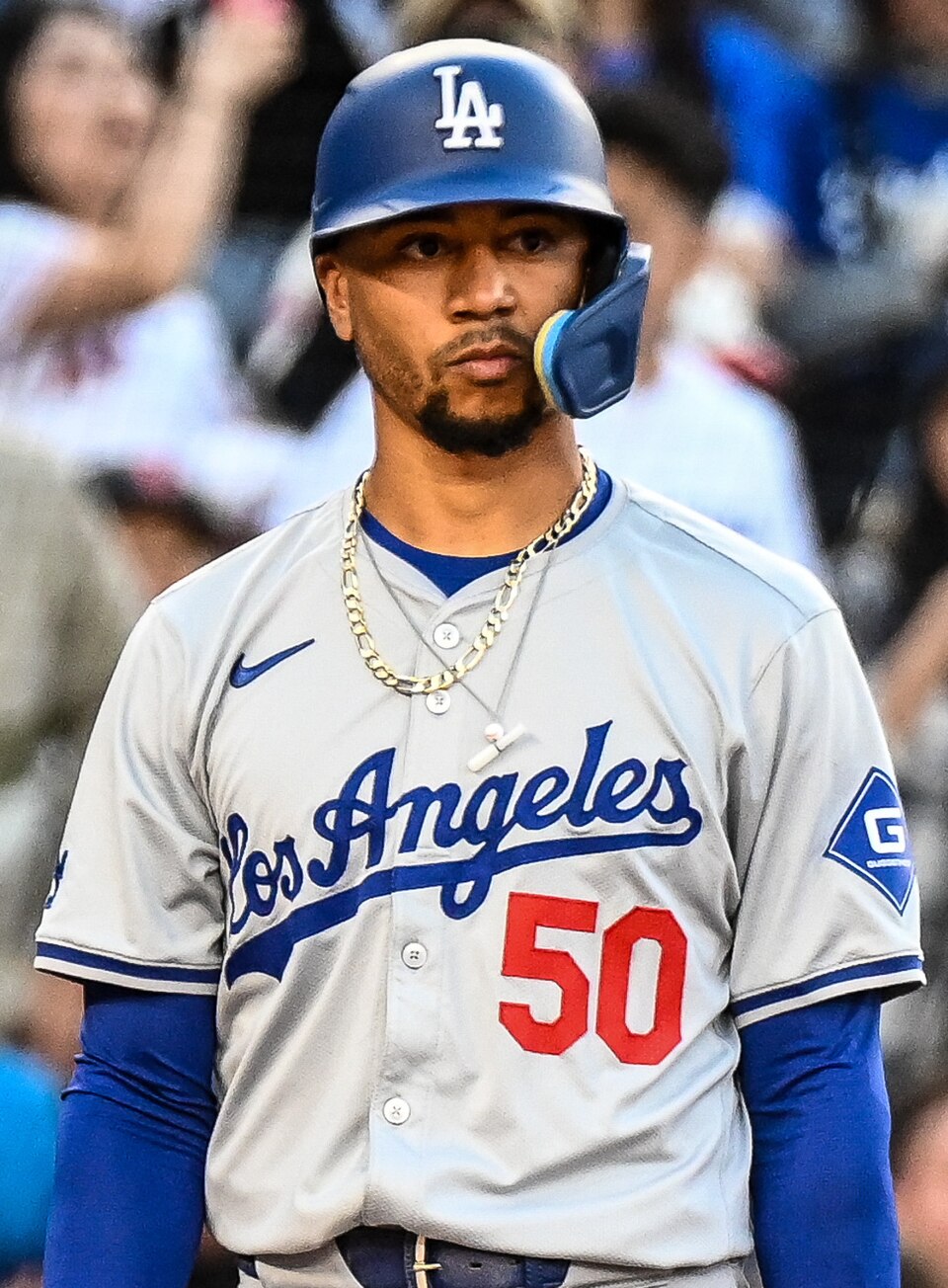
Offensive Output and Plate Discipline Trends
Betts has posted a career .292 batting average in Dodgers uniform, supported by a .372 on-base percentage and .505 slugging mark. These figures translate to a .877 OPS and 140 OPS+, well above league average. Walk rates have hovered between 11 and 13 percent annually, while strikeout rates have remained under 16 percent, demonstrating exceptional plate discipline that allows him to work deep counts and avoid weak contact.
The consistency of Betts’ offensive performance across different seasons stands out when examining year-to-year variance. Unlike many elite players who experience notable fluctuations in production, Betts has maintained a remarkably stable approach at the plate. His ability to adjust to opposing pitching schemes while staying true to a disciplined hitting philosophy has made him one of the most reliable offensive contributors in baseball. Even during seasons where power numbers dipped slightly, his batting average remained above .285, and his on-base percentage never dropped below .360, underscoring the reliability of his offensive profile.
Extra-Base Hit Distribution
- Doubles: 142 career totals, averaging 28 per 162-game pace
- Home runs: 118, with a 22-per-season rate that reflects consistent pull-side power
- Triples: 12, highlighting occasional extra speed on balls in the gap
His isolated power of .213 ranks among the top 15 percent of outfielders during his Dodgers tenure, showing that extra-base production stems from both gap hitting and over-the-fence power rather than relying on one skill alone.
The distribution of Betts’ extra-base hits reveals a well-rounded power approach that makes him a more versatile offensive weapon. While home runs capture attention, his double production demonstrates an ability to drive the ball into gaps, which creates scoring opportunities even when leaving the park isn’t feasible. This gap-to-gap power is particularly valuable in the National League, where Dodgers pitchers must bat and runners in scoring position often come at critical moments. His 12 career triples also indicate that Betts possesses the speed and baseball intelligence to take advantage of defensive positioning, a trait that compounds the value of his already-impressive batting average.
Defensive Metrics and Range Evaluation

Betts has earned multiple Gold Glove awards in right field, backed by strong advanced numbers. His career Defensive Runs Saved total exceeds +45, while Ultimate Zone Rating sits at +38. These marks reflect above-average range to both the foul line and the gap, plus elite arm strength that has limited runners to a 28 percent success rate on attempted extra bases.
Positioning data shows Betts has saved an average of 9.4 runs per season through optimal depth and lateral movement. His ability to read ball flight off the bat has kept batting average on balls in play against him 20 points below league norms for right fielders, underscoring the tangible impact of his glove work on run prevention.
Beyond the statistical measures, Betts’ defensive excellence manifests in subtle ways that casual observers might overlook. His quick first step off the line allows him to track fly balls more efficiently than most outfielders, reducing the number of hits that find the gaps or drop in shallow territory. Additionally, his throwing accuracy to multiple bases—not just home plate—prevents runners from taking liberties on the basepaths. This comprehensive defensive skill set means that opposing teams cannot exploit weaknesses in right field positioning, a luxury that many baseball franchises cannot claim with their roster of defenders.
Base-Running Impact and Situational Value
Betts has stolen 72 bases while being caught only 12 times during his Dodgers career, producing an 86 percent success rate. His sprint speed has remained in the 85th percentile or higher, allowing him to take extra bases on singles and doubles at an above-average clip. This aggressiveness has added an estimated 18 runs of value through base-running alone.
In high-leverage situations, Betts has delivered a .301 average with runners in scoring position and a .312 mark with two outs. These clutch splits, combined with his overall on-base skills, have produced a 4.8 percent higher win probability added per plate appearance than the typical Dodgers regular.
The quality of Betts’ stolen base attempts deserves particular attention, as the 86 percent success rate significantly exceeds the 72 percent threshold typically considered worthwhile in modern baseball strategy. This efficiency indicates that Betts makes intelligent reads on pitchers and catchers, stealing bases when conditions are favorable rather than taking unnecessary risks. His ability to get a jump on left-handed pitchers has been especially notable, as opposing teams have had difficulty neutraling his threat to steal. This threat factor itself has value, as it can disrupt opposing pitchers’ rhythm and create opportunities for teammates to capitalize on distracted defenses.
Advanced Value Metrics and Historical Context
Wins Above Replacement totals for Betts in Dodgers colors average 6.1 per 162 games, placing him in the top tier of position players league-wide. His peak seasons have featured WAR marks above 7.0, driven by balanced contributions of 4-plus offensive wins and 2-plus defensive wins. Fangraphs and Baseball Reference versions of the metric align closely, confirming the robustness of his value across different defensive estimation models.
When compared to other Dodgers outfielders since 2010, Betts ranks second in cumulative WAR behind only one Hall of Fame caliber player. His combination of low strikeouts, high walk rates, plus-gold-glove defense, and efficient base-running creates a profile that has few historical parallels among right fielders in franchise history.
The significance of Betts’ consistency in generating 6-plus wins per season cannot be overstated in the context of modern baseball economics and roster construction. Teams that can rely on a player to contribute that level of value year after year gain enormous competitive advantages, as they can allocate resources to address other roster needs rather than constantly replacing production lost to decline. Over a five-year window, Betts’ production translates to approximately 30 wins of value—enough to substantially improve a franchise’s championship probability. This sustained excellence explains why the Dodgers made the aggressive moves necessary to acquire him and why they have prioritized keeping him in their lineup.
Betts’ approach to the game exemplifies modern baseball excellence. Unlike players who rely heavily on one dominant skill, his all-around competence has made him invaluable across diverse game situations. Whether the Dodgers need a player to get on base, drive in runs, make a defensive gem, or spark a rally with a stolen base, Betts regularly delivers. This versatility, combined with his professional demeanor and consistent availability, has cemented his status not just as a star player, but as a cornerstone of a championship-contending franchise.