
Complete Guide to Baseball Field Dimensions, Layout, and Regulations
A baseball field is far more than just grass and dirt—it’s a precisely measured battlefield where professional athletes compete at the highest level. Whether you’re an MLB fan, aspiring player, or casual observer, understanding the anatomy of a baseball field is essential to appreciating the game. From the perfectly manicured infield to the sprawling outfield, every dimension matters, and every measurement is regulated by official baseball standards.
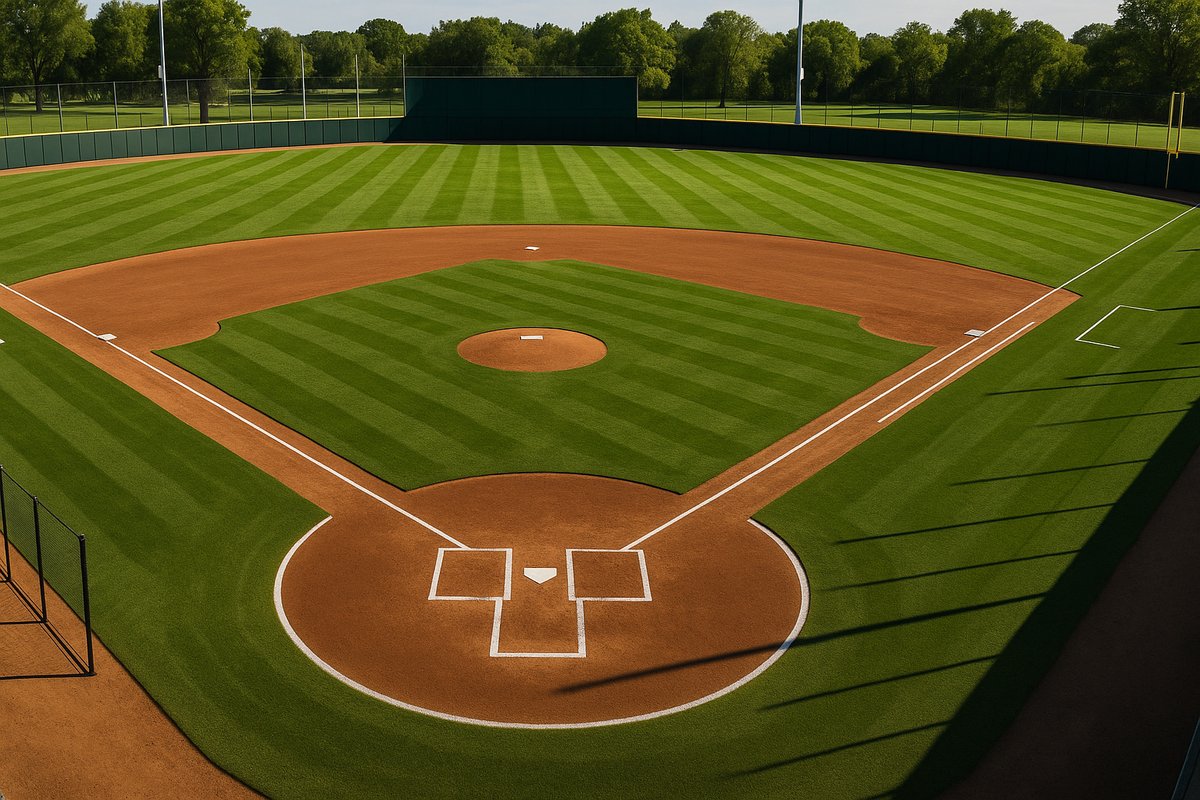
In this comprehensive guide, we’ll break down everything you need to know about baseball field dimensions, specifications, and the regulations that govern them across Major League Baseball, college baseball, and amateur levels.
Official Baseball Field Dimensions
The modern baseball field has been remarkably consistent since the early 1900s. The infield is a perfect square rotated 45 degrees to create the diamond shape we know today. Here are the official dimensions for a regulation baseball field:
- Distance between bases: 90 feet
- Pitcher’s mound distance from home plate: 60 feet, 6 inches
- Foul lines (first and third base): 330 feet minimum
- Center field fence distance: 400 feet minimum
- Home plate width: 17 inches
- Pitcher’s mound diameter: 18 feet
- Batter’s box dimensions: 4 feet × 6 feet
- Catcher’s box dimensions: 43 inches × 8 feet
These dimensions create the standard 90-foot diamond that MLB teams use across all 30 ballparks. However, while infield distances are standardized, outfield fence distances vary by ballpark, which adds strategic diversity to the game.
The Infield: Heart of the Baseball Field
The infield is the most regulated section of any baseball field. Composed of four bases arranged in a square, the infield is where most of the game’s action occurs. Let’s examine each component:
The Diamond
The diamond—formed by home plate, first base, second base, and third base—sits at the center of the baseball field. Each base is a 15-inch square, with their inner corners positioned exactly 90 feet apart. This 90-foot distance has been the standard since the game’s inception and remains unchanged in modern baseball.
Home Plate
Home plate is unlike any other base. It’s a five-sided white rubber slab, 17 inches wide and 8.5 inches long, positioned where the batter stands. The strike zone directly above home plate is defined by the rulebook as the area over the plate between the batter’s knees and mid-chest. MLB umpires use this zone to make ball-and-strike calls that define every at-bat.
The Bases
First, second, and third bases are all 15-inch white canvas squares, positioned at each corner of the infield diamond. Second base is particularly important—it sits at the intersection of the foul lines extended from the first and third baselines, marking the center point of the baseball field.
Foul Territory
The foul lines extending from home plate down the first and third baselines define fair and foul territory on a baseball field. These lines are typically 3 to 4 inches wide and must extend at least 330 feet from home plate. Any ball landing outside these lines in the outfield is ruled foul.
The Pitcher’s Mound and Pitcher’s Box
The pitcher’s mound is one of the most critical features of a baseball field. Located exactly 60 feet, 6 inches from home plate, this 18-foot-diameter mound sits slightly elevated above the rest of the infield.
Key specifications include:
- Height: 10 inches above home plate
- Diameter: 18 feet
- Rubber placement: 24 inches from the back of the mound, 60 feet, 6 inches from home plate
- Slope: Gradual descent from center toward the infield
The pitcher’s rubber is where the pitcher begins their motion. It measures 24 inches by 6 inches and is positioned so the pitcher’s toes can be placed against it while delivering the ball. This distance of 60 feet, 6 inches became the standard in 1893 and hasn’t changed since. At the professional level, this distance creates the dynamic between hitter and pitcher that defines baseball.
The Outfield on a Baseball Field
While the infield is strictly regulated, the outfield of a baseball field offers more architectural flexibility. However, MLB regulations do establish minimums:
- Left field line: Minimum 330 feet
- Center field: Minimum 400 feet
- Right field line: Minimum 330 feet
- Foul lines: Must extend at least to the outfield fence
This means every MLB ballpark has unique outfield dimensions. Yankee Stadium’s short right field porch is just 314 feet, while some stadiums stretch center field to 425+ feet. These variations create distinct playing characteristics and affect offensive statistics across the league. A home run hitter thrives in one ballpark while struggling in another based on the baseball field’s layout.
The Outfield Grass
The outfield grass is typically maintained at 3/4 to 1 inch height during the season. Ground crews meticulously care for the baseball field’s grass, cutting in patterns and maintaining consistent moisture levels that affect how balls roll and bounce during play.
Infield Dirt and Playing Surface
The infield dirt of a baseball field is carefully engineered. A typical infield uses a mixture of clay, sand, and silt, carefully graded and compacted to provide proper drainage and consistent playing conditions.
Key features include:
- Base paths: Clearly defined dirt strips connecting the bases
- Batter’s box: Dirt area where the hitter stands
- Catcher’s box: Dirt area behind home plate where the catcher crouches
- Pitcher’s mound: Elevated dirt formation with the rubber
- Cutout areas: Around each base for player safety and visibility
Professional teams spend thousands of dollars annually maintaining their baseball field’s infield dirt. The consistency of this playing surface directly impacts the speed and trajectory of ground balls, making it crucial to gameplay strategy.
Foul Territory and Stands
Foul territory on a baseball field is any area outside the foul lines. While foul territory technically extends all the way to the stands, ground crews and ballpark designers must ensure spectators are safely positioned. The distance from the foul lines to the stands varies by ballpark architecture.
The warning track—typically 300-350 feet from home plate—helps outfielders judge distance from the fence. This dirt or synthetic strip provides tactile feedback so players know they’re approaching the wall without looking.
Baseball Field Dimensions Across Different Levels
While MLB maintains strict standards, other levels of baseball use slightly different specifications:
College Baseball
College baseball fields follow similar regulations to MLB with 90-foot bases. However, minimum outfield distances are typically 330 feet down the lines and 400 feet to center field, matching MLB standards. Some college programs use slightly shorter distances.
Minor League Baseball
Minor league baseball fields maintain the same infield dimensions as MLB but may have varying outfield distances depending on the facility’s age and construction.
High School Baseball
High school baseball fields use 90-foot bases like professional baseball, but typically have outfield fences at 330 feet down the lines and 400 feet to center, though these can vary by state regulations and facility.
Youth Baseball
Little League and youth baseball use shorter distances: 60-foot bases, 46-foot pitcher’s mound, and varying outfield dimensions based on age groups.
Notable Unique Baseball Field Dimensions in MLB
Despite standard regulations, some MLB ballparks feature iconic unique characteristics:
- Yankee Stadium: 314 feet right field porch, 390 feet left field corner
- Fenway Park: 310 feet left field line, famous Green Monster wall
- Coors Field: 415 feet center field, thin air affects ball carry
- Oracle Park: 421 feet center field, has splash hit area in the bay
- Comerica Park: 345 feet left field, spacious outfield
These variations mean that a player’s statistics can shift dramatically when traded to a different baseball field. This is why players with identical talent levels may have different home run totals depending on their ballpark.
Conclusion: The Precision Behind America’s Pastime
The baseball field is a masterpiece of geometric precision and strategic design. From the perfectly measured 90-foot diamond to the pitcher’s mound exactly 60 feet, 6 inches away, every dimension has been carefully considered to create balanced competition. While the infield remains standardized, the outfield’s flexibility adds variety and regional identity to ballparks across America.
Whether you’re watching a game at Yankee Stadium, Dodger Stadium, or your local minor league diamond, understanding the baseball field’s dimensions deepens your appreciation for the game. The next time you watch an MLB broadcast, take a moment to notice how the ballpark’s unique characteristics influence strategy, statistics, and the outcome of games. The baseball field isn’t just a playing surface—it’s an integral character in baseball’s greatest narratives.