
Baseball Sunglasses: How Glare Shapes Defense & Stats
Walk into any dugout on a getaway day game and you’ll see it — that flip-down lens snapping up or down depending on whether a guy is running to his position or heading back to the bench. Baseball sunglasses look like a minor accessory next to gloves, bats, and spikes, but the numbers on sun-related fielding errors tell a different story. This is a piece of gear that has quietly influenced defensive metrics, roster decisions, and even stadium architecture for the better part of a century.
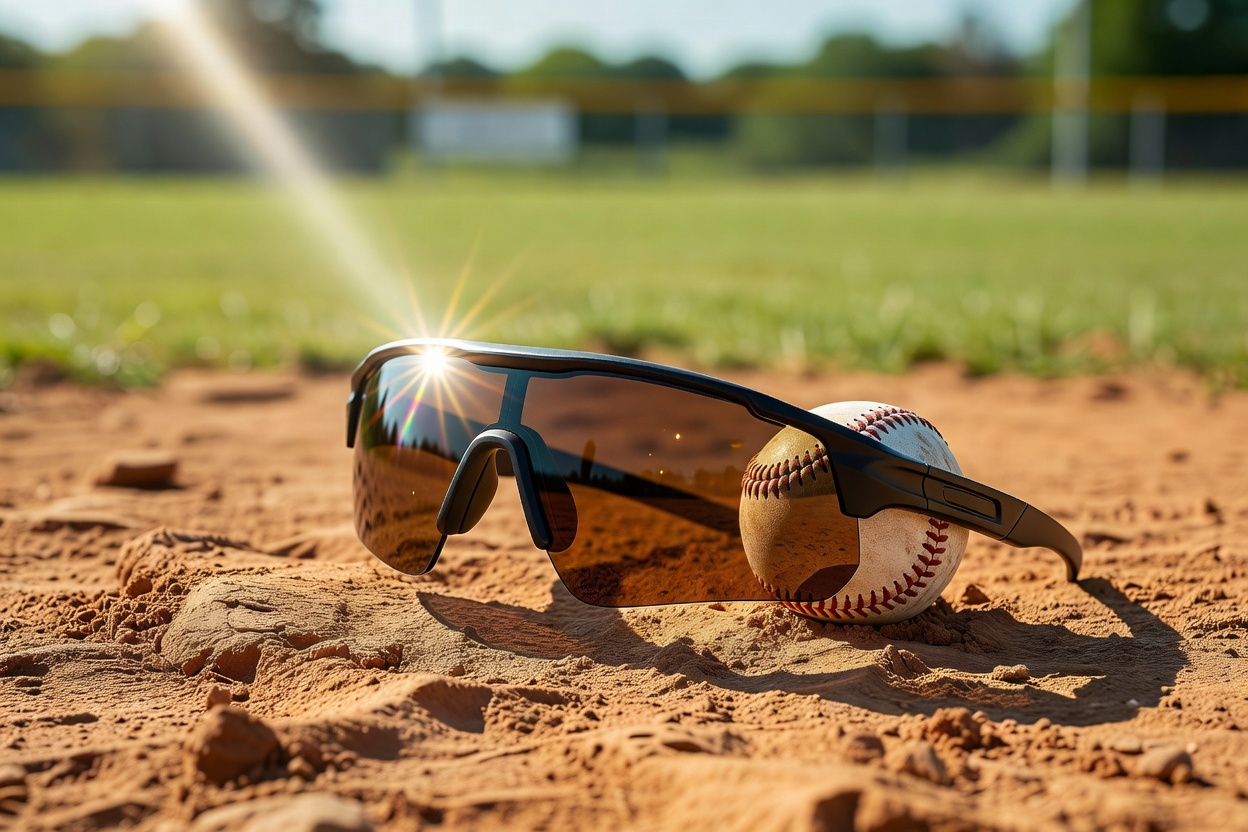
Sun glare has been a documented scoring hazard since the early box-score era. Official scorers have long had discretion to rule a dropped fly ball as a “sun error” rather than charge it fully against a fielder’s range, and that discretion exists precisely because glare is a recurring, quantifiable problem — not an excuse invented by modern players.
Why Baseball Sunglasses Became a Defensive Necessity
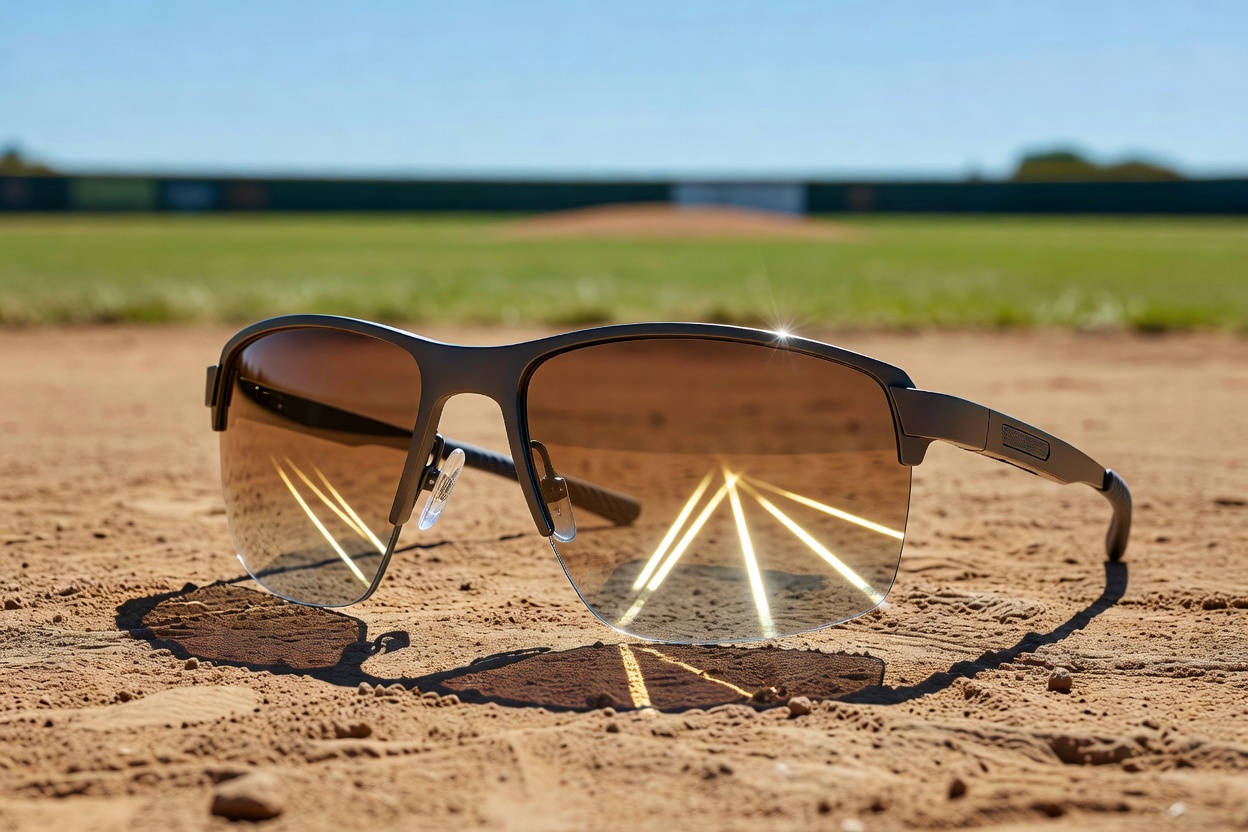
Outfield positioning data makes the case better than any anecdote. Right fielders at parks with afternoon sun fields — old Yankee Stadium’s right field, Wrigley Field’s power alley, the old Tiger Stadium sun trap in left — have historically posted lower fly-ball catch rates during day games than in comparable night contests. Baseball Reference’s sun field entry catalogs several parks where the glare problem became so severe it altered how managers platooned outfielders on day-game rotations.
That’s the practical backdrop for why baseball sunglasses stopped being a style choice and became a piece of standard equipment somewhere in the 1970s and 80s, right alongside the rise of tinted flip-down lenses attached to batting helmets and fielding caps.
The Flip-Down Revolution
Before flip-downs, players either squinted, used eye black liberally, or wore full-frame shades that they had to remove and stash the second the ball wasn’t in the sun field. The flip-down design solved a real in-game problem: a right fielder chasing a foul pop near the stands needs full visibility instantly, no fumbling with sunglasses on a headband. Oakley’s sports-specific lens lines, along with helmet-mounted flip visors, became fixtures in MLB dugouts through the 1990s and 2000s, and you can trace their adoption directly against the growth of sabermetric defensive tracking — UZR, DRS, and eventually Statcast’s Outs Above Average — all of which started exposing which outfielders were actually elite at tracking balls in tough lighting, sunglasses or not.
What the Stats Say About Sun Glare and Errors
Modern tracking systems give us a much better lens (pun intended) into how much glare actually costs a defense. Statcast’s catch probability model, detailed on MLB.com’s Statcast glossary, assigns an expected catch percentage to every batted ball based on hang time, distance, and route efficiency — and outfielders routinely underperform that expectation on balls hit into a sun field during day games. Analysts have flagged specific summer day-game stretches where OAA dips noticeably for corner outfielders playing home stands with brutal afternoon angles.
- Day games historically show higher rates of “lost in the sun” scorer notations than night games at the same parks.
- Right field sun fields (a byproduct of most parks orienting home plate to the northeast per historic MLB park design guidelines) disproportionately affect right fielders compared to left fielders.
- Outfielders who wear properly fitted, high-contrast lens sunglasses show more consistent route efficiency on Statcast’s route data during peak-glare innings, though team-level data on this specific split isn’t publicly broken out by MLB.
The Rule Book Angle
There’s also a regulatory wrinkle worth knowing. Youth and amateur leagues governed by NFHS and similar bodies have specific rules about lens tint and mirrored coatings — some jurisdictions restrict reflective lenses for safety reasons during play, which is why you’ll notice most professional-grade baseball sunglasses favor polarized or contrast-enhancing tints (amber, rose, or grey-green) over straight mirror finishes. Polarization cuts glare off both the sky and any hard playing surface, which matters far more in baseball than in most other outdoor sports because fielders are tracking a small white object against a bright, often hazy sky for a full two to four seconds per play — plenty of time for glare-induced misjudgment on depth and spin.
Baseball Sunglasses Through the History of the Game
It’s easy to forget that for most of baseball’s first century, players had almost nothing to combat sun glare beyond squinting and turning their heads. Old photographs from the Deadball Era show outfielders shielding their eyes with bare hands on high pop-ups — a move that, if attempted today, would look almost comically outdated on a broadcast. The transition to eye black, then simple tinted glasses, then sport-specific flip-downs, tracks almost exactly with the broader equipment professionalization documented across baseball’s evolution, from glove padding to spike design, chronicled extensively by the National Baseball Hall of Fame’s equipment history archives.
A Small Edge That Adds Up
None of this means sunglasses turn a bad defender into Andruw Jones. But at the margins — and modern baseball analysis is entirely built on margins — proper eyewear removes one variable from an outfielder’s read on a ball. When teams are fighting over fractions of a win in Outs Above Average, and front offices are pricing defensive value into arbitration cases and free-agent contracts, a $150 pair of properly tinted flip-downs is one of the cheapest marginal improvements a player can make. It won’t show up as its own line in a WAR calculation, but ask any veteran right fielder who’s lost a ball in the sun during a day game at Wrigley what a clean sightline is worth, and you’ll get a very specific, very frustrated answer.
Equipment rarely gets its own chapter in baseball history books, but glare-fighting eyewear has quietly shaped defensive alignment, day-game roster construction, and even how scorers assign blame on a missed fly ball for decades — and it’s not going anywhere as long as day baseball exists.